Mong Kok: The Heart of Kowloon in Photos
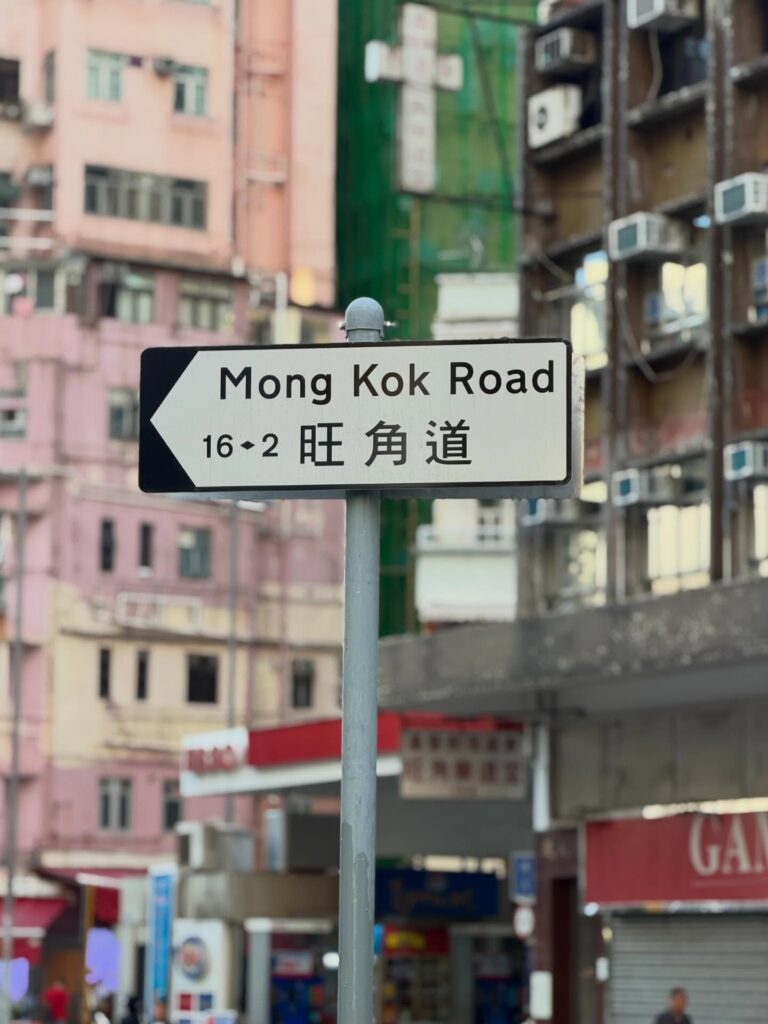
Exit E2 at Mong Kok Station, walk a minute, and the whole place starts yelling at you… stall tarps, pawn signs, minibus roofs, wet pavement, somebody selling socks, somebody carrying flowers, somebody absolutely flooring it through a yellow light on Nathan Road. That is Mong Kok to me. Not a postcard. More like a pressure system.
I’ve been wandering this neighbourhood since 2012, which is long enough to watch it change shape without ever really calming down. The neon has thinned out. The crowds come and go. Protests, typhoons, lockdowns, redevelopment, LED creep… all of it leaves a mark. But the core thing is still there. Density. Energy. Shopping. You feel it your soul as you wander this place.
If you just want the raw archive, start with the Mong Kok location page. If you want night work, dip into Night Neon. For the moving parts, buses and minibuses and general street chaos, there’s Transport. This guide is the edited walk… the version built from 700+ pics over 14 years.
Start where the foot traffic hits you
The easy way in is Mong Kok Station Exit E2 or D3, then head towards Tung Choi Street and Nelson Street. E2 is the cleaner approach if you want to walk straight into the crowd. D3 drops you into the same mess from a slightly different angle, which is also very Mong Kok… efficient, a bit chaotic, close enough.
The obvious first stop is Ladies Market. Yes, it’s a tourist trap. Yes, half the fun is the side streets around it rather than the centre strip itself. But it still works as an opening scene because it tells you what sort of neighbourhood you’re in. Mong Kok sells things. Constantly. Without apology. Don’t forget to bargain.


From 2012, till present day, the market hasn’t’ changed. What changes is the merch. Sourced from China, based on the present moment, cheap and kitshcy. Well, some products persist. I heart Hong Kong tees and caps, souvinier fridge magnets… these never change. The rest of it? Whim of the market.
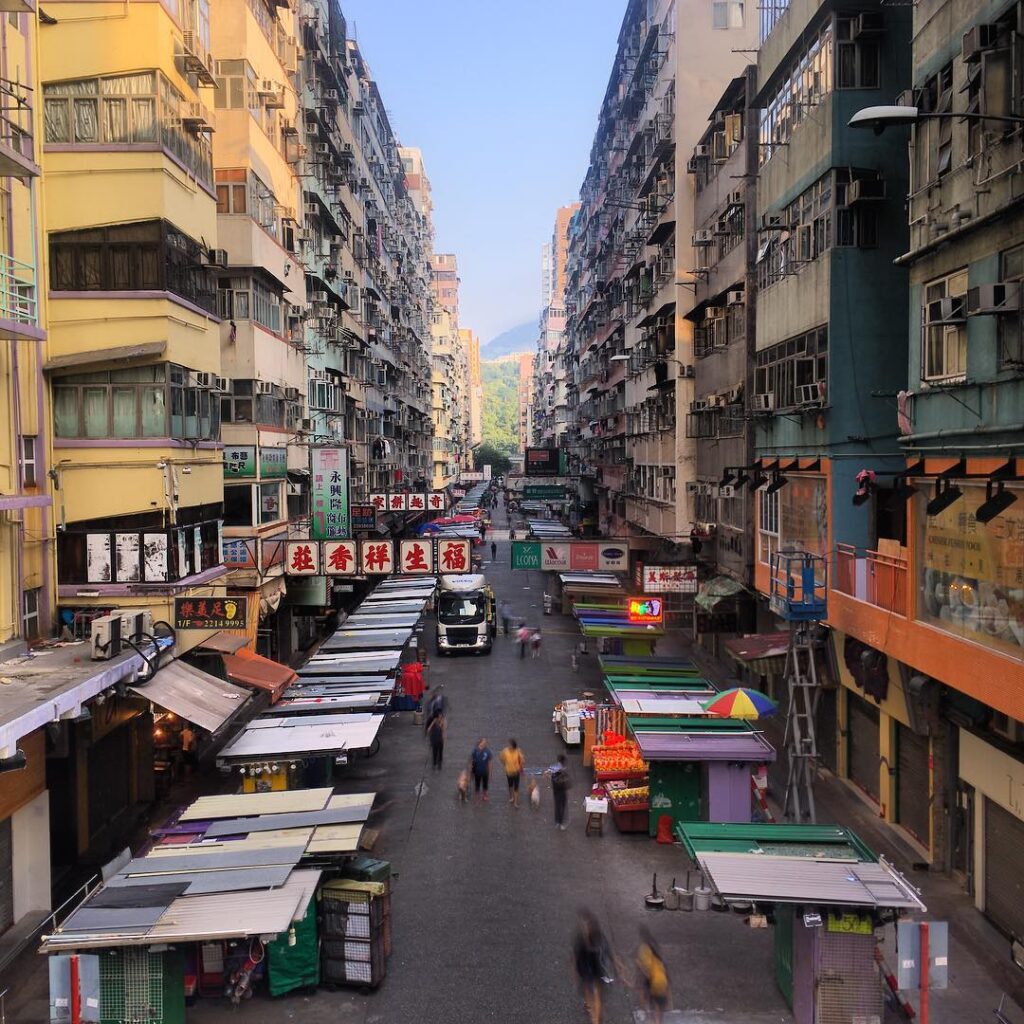
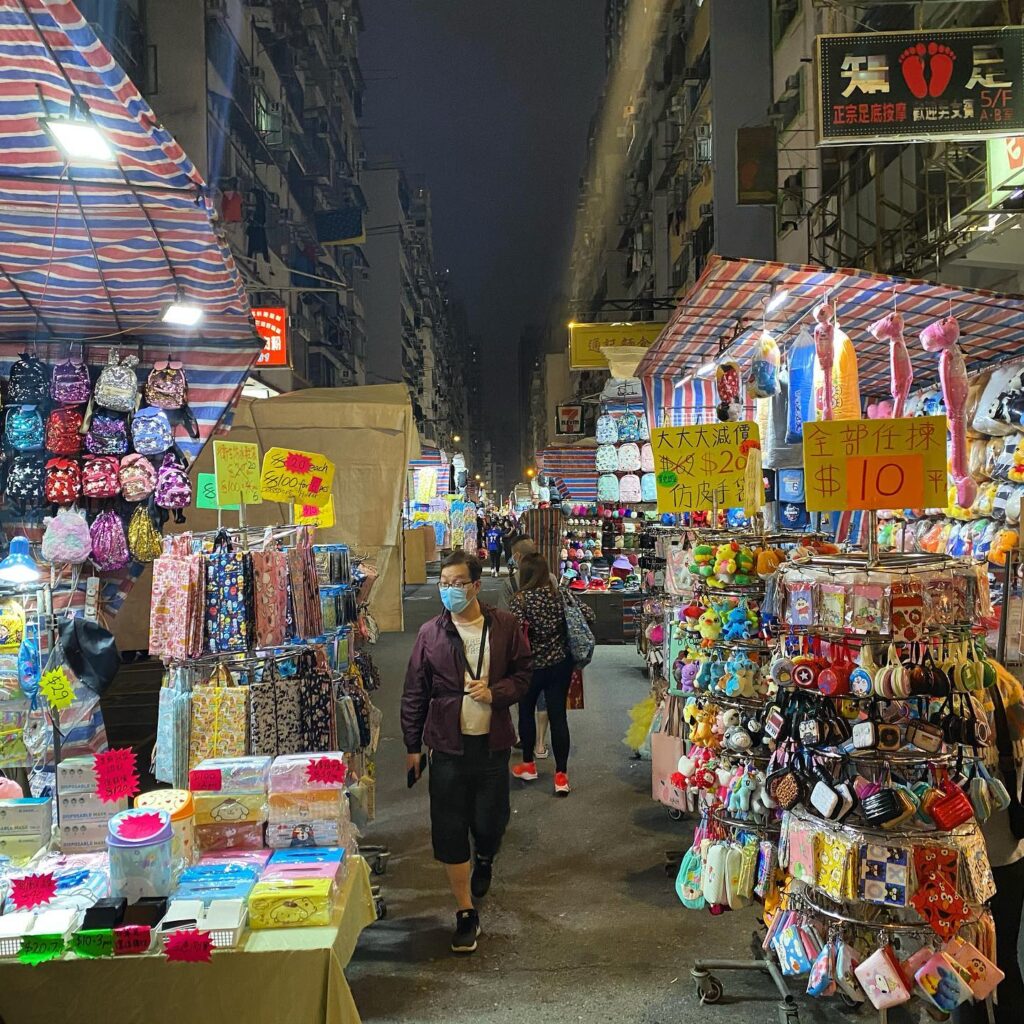
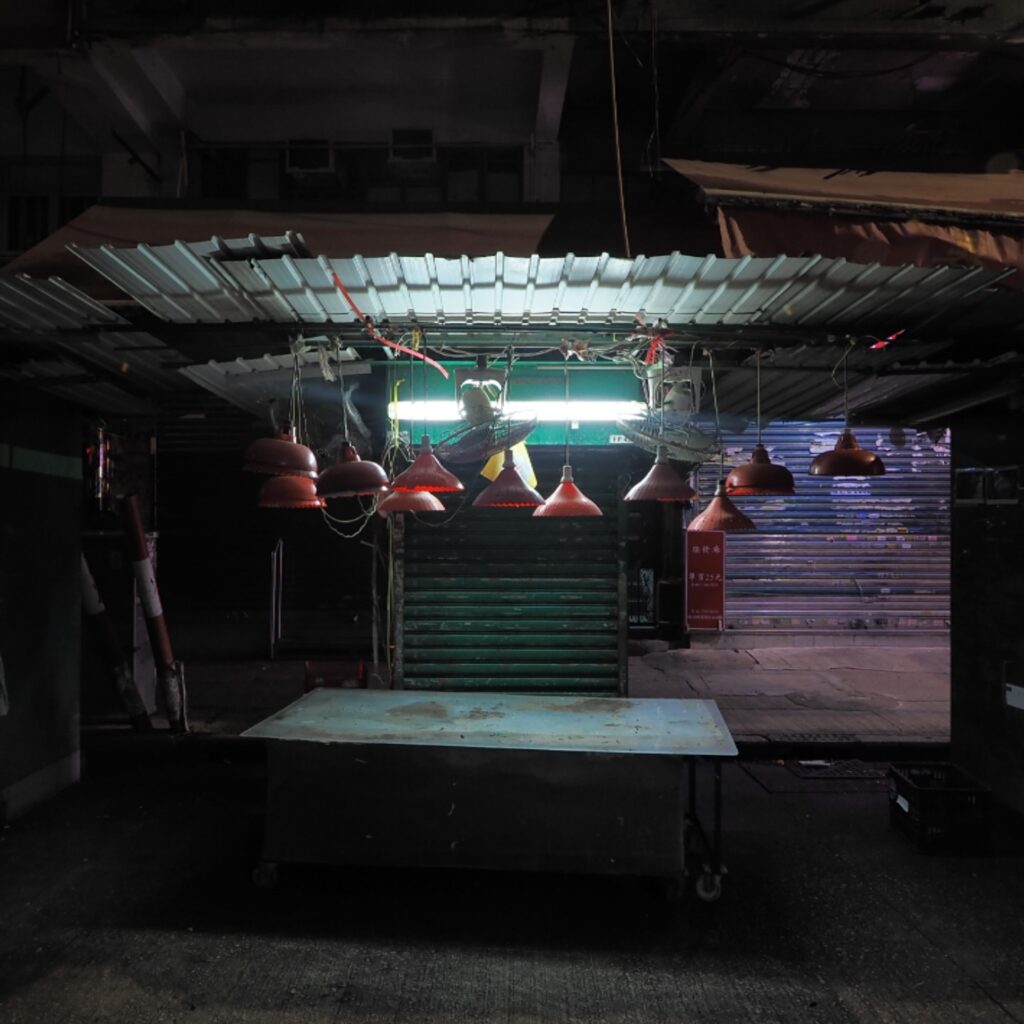
One of the weirdest truths about Mong Kok is that it can look totally different depending on the hour. Go in the middle of the day and it’s kinda flat, some stalls aren’t open yet. Some are. Go too late and it becomes teardown time… carts, folded tables, tired faces, the whole machine dismantinling itself.
Then drift north… flowers, birds, everyday ritual
A lot of guides stop at Ladies Market, which is a mistake. The better walk is to let Mong Kok blur into Prince Edward a bit. Keep going north and you hit one of my favourite tonal shifts in the area: flower stalls, then the Bird Garden, then all the tiny gestures of local routine that tourists tend to walk past too quickly.
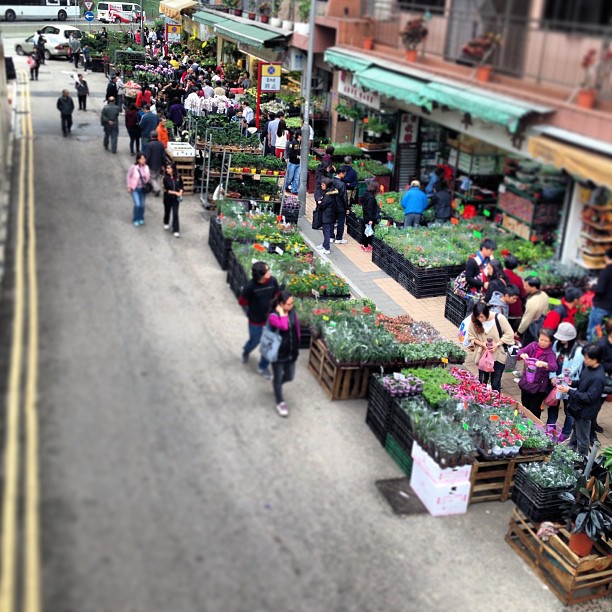
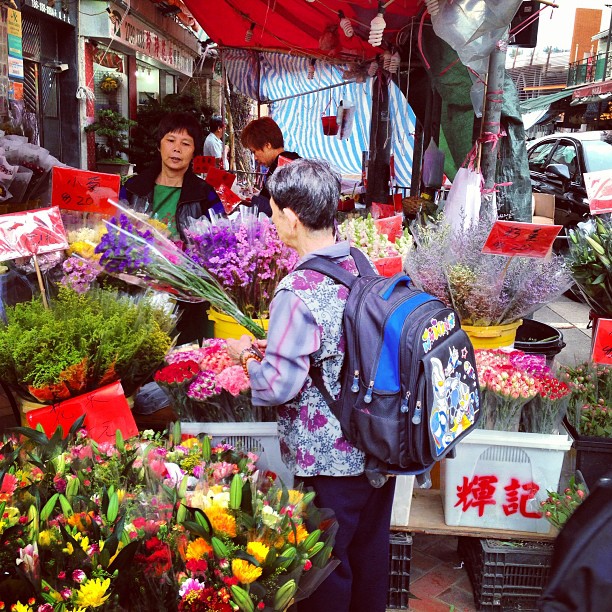
The Flower Market is best in the morning, before the day gets sticky and everybody starts jostling for space. It’s not just colour… it’s handling, carrying, wrapping, choosing. People doing practical things with flowers, not just admiring them.
Grab this chance before it goes away. The Flower Market is slated for redevelopment. Plants and old plaster to make way for gleaming towers of glass and steel. Time (and money) march on and trample the flowers underfoot.
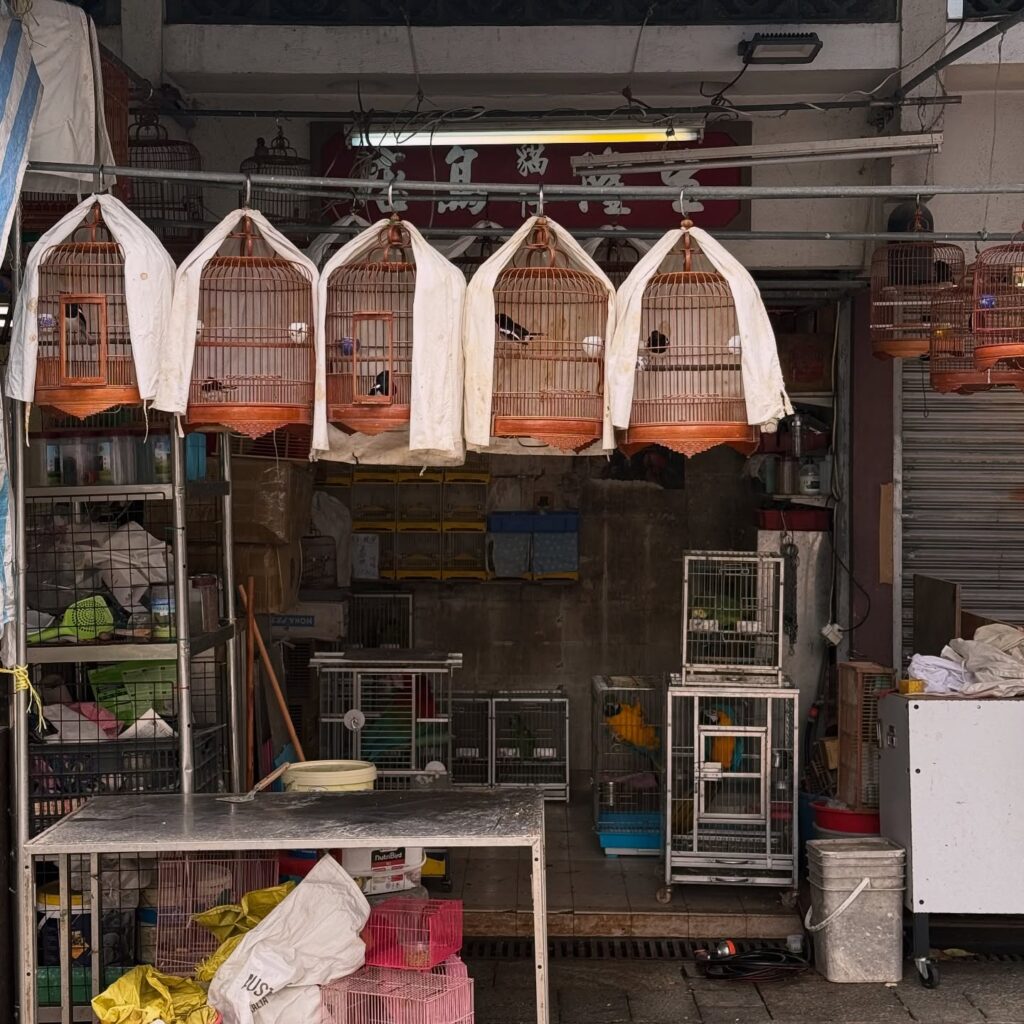
The Bird Market / Garden is one of those places that makes more sense if you stop trying to treat it like an attraction. It’s better as a pocket of habit. Men with cages. Conversations you’re not part of (and probably can’t understand). A slower rhythm, somehow sitting right next to one of the busiest districts in the city.
Little fact: this isn’t the first Bird Market / Garden. The original was on the site where Langham Place now stands. I regret that I never got to see this. Soon this will happen to the Flower Market too. Shuffled away to make room for progress.
If you’ve got time, this northern stretch is also where the neighbourhood starts feeling less like a checklist and more like a lived-in system. Good for wandering. Good for side streets. Good for letting the camera find smaller things.
Look up. Mong Kok isn’t just ground level
At street level, Mong Kok is all compression. Look up and it gets even better.
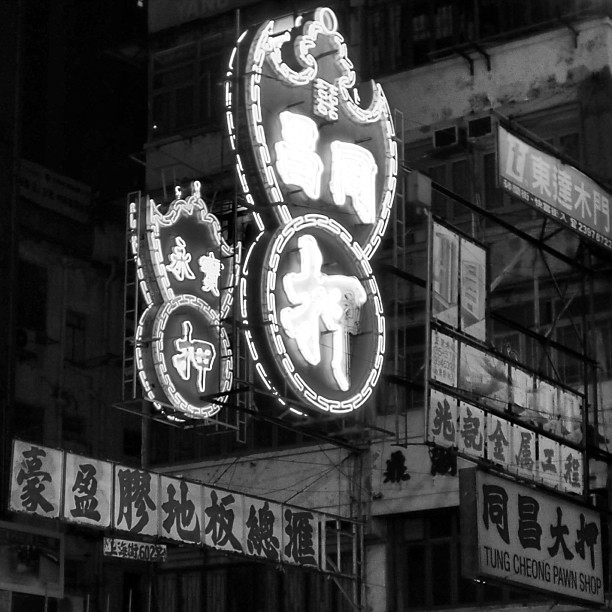
That’s where the old pawn signs come in… giant, vertical, unapologetic. Even with the long retreat of true neon, Mong Kok still has these fragments of old visual language hanging over the road like stubborn relics.

You also get the glass-and-density side of the area if you stop staring only at the stalls. Langham Place is part of that story whether you like it or not. It’s a glossy interruption in a district that usually works in layers of grime, signage and repetition.
You don’t even realise it’s there until you stumble upon it. Hidden in the old buildings a giant shopping mall and office tower. How giants can hide so efficiently is surprising.
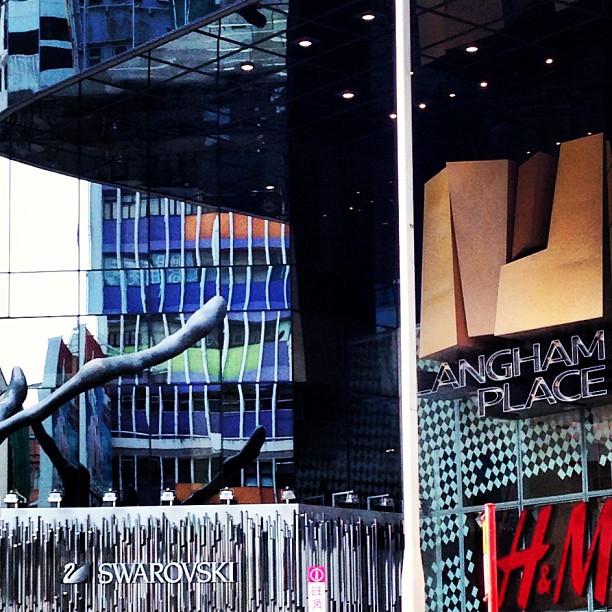
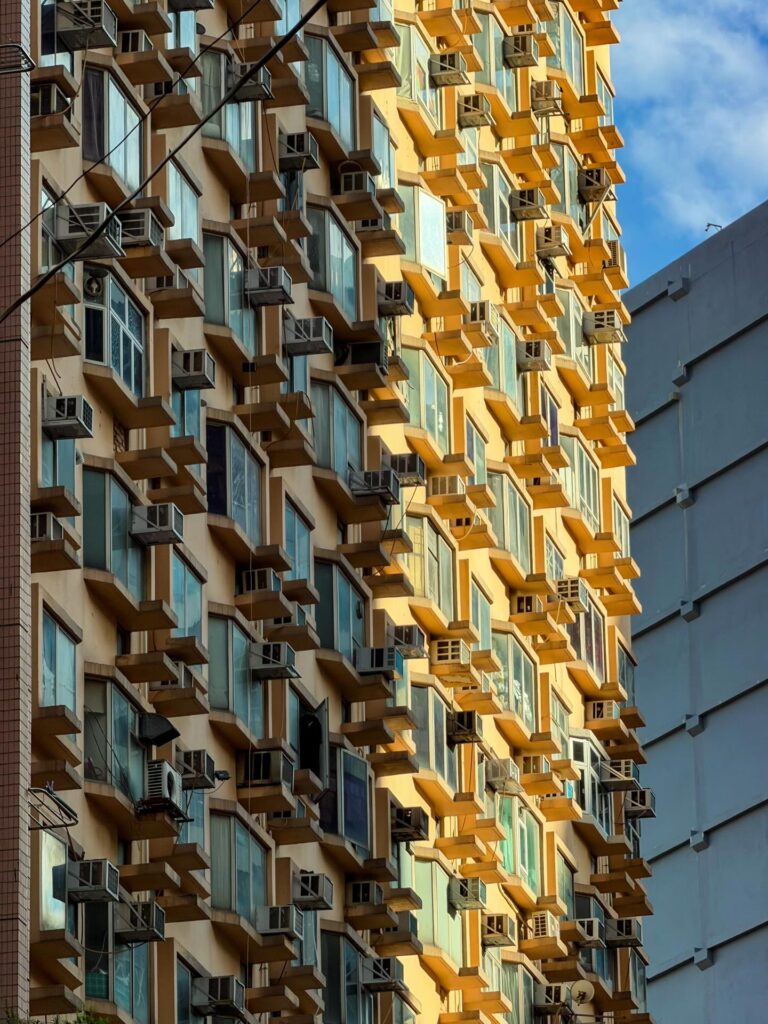
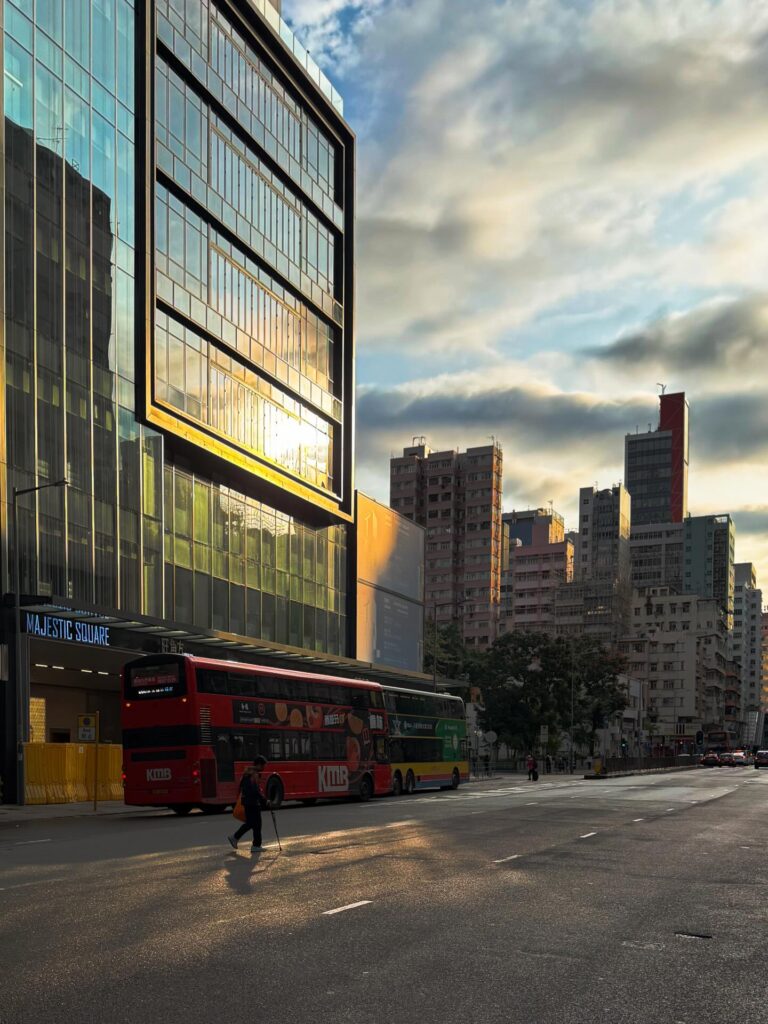
That last frame matters to me because it shows how Mong Kok spills beyond its tourist shorthand. The edges matter. The border with Tai Kok Tsui matters. The view upward matters. It’s not just one market street with nice signs… it’s a whole vertical, overcrowded organism. Hong Kong is quite vertically oriented. Shopping tip: many cool shops and stores are hidden up in the higher levels of buildings. Never trust the ground level. The goodies are in the sky.
Nathan Road, Argyle Street, Canton Road… the moving parts
If you want the most recognisable Mong Kok mood, walk the big roads after dusk. Nathan Road for the traffic canyons. Argyle for the junction energy. Tung Choi for the stacked signage and market spill. Canton Road for the market scenes that feel more local.

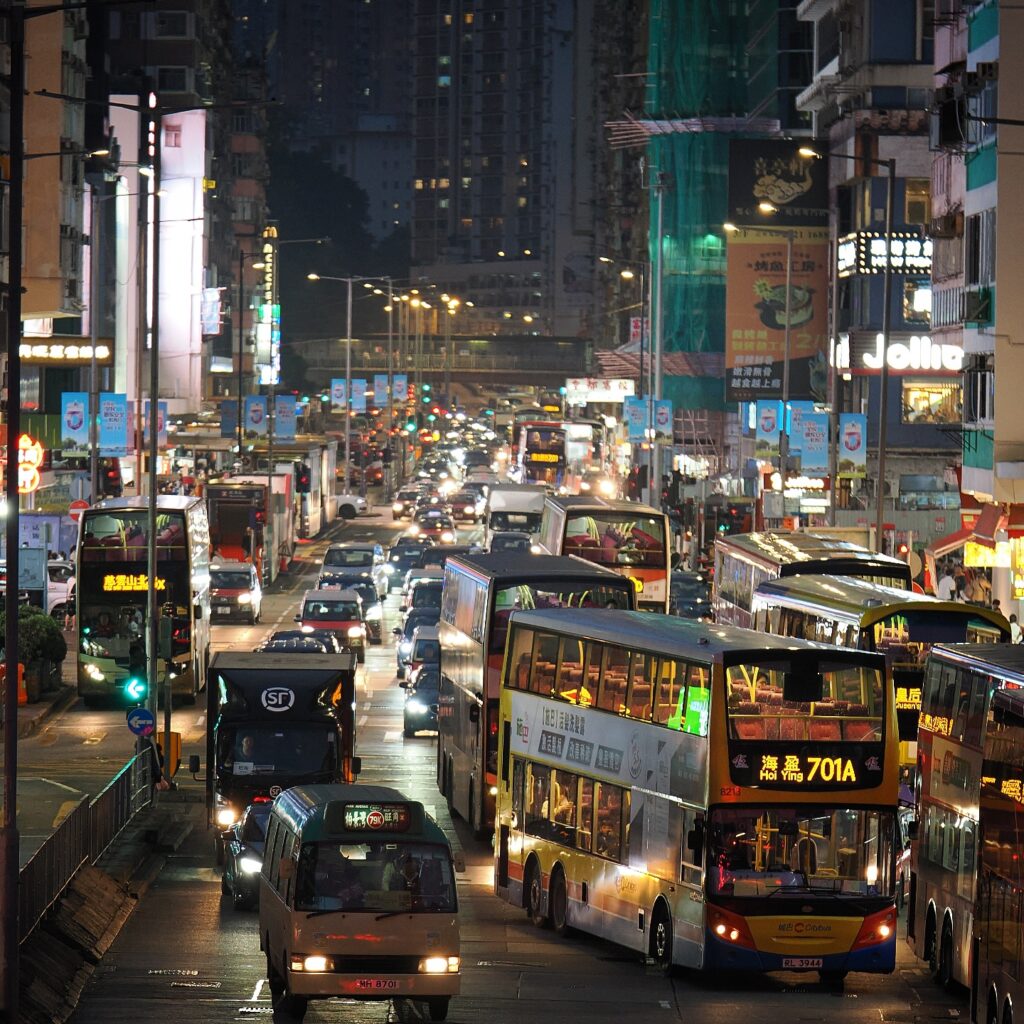

This is also where Street and Transport really start overlapping. Mong Kok isn’t tidy enough for pure categories anyway. A bus is never just a bus here. It’s colour, pace, blockage, reflection, timing, a moving wall you compose around.
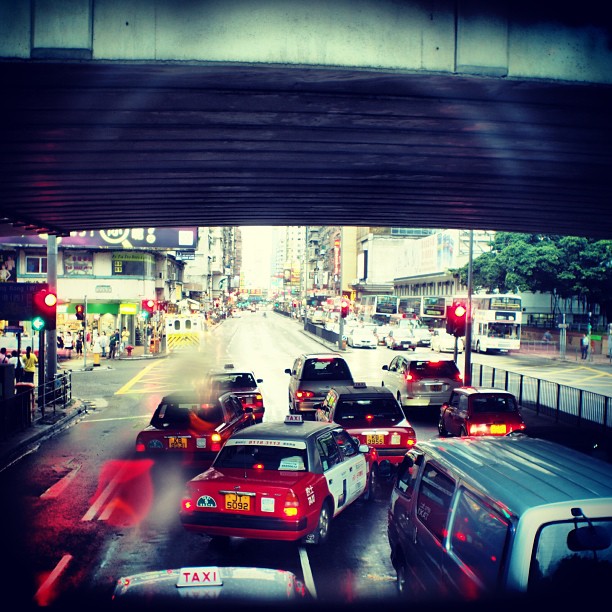
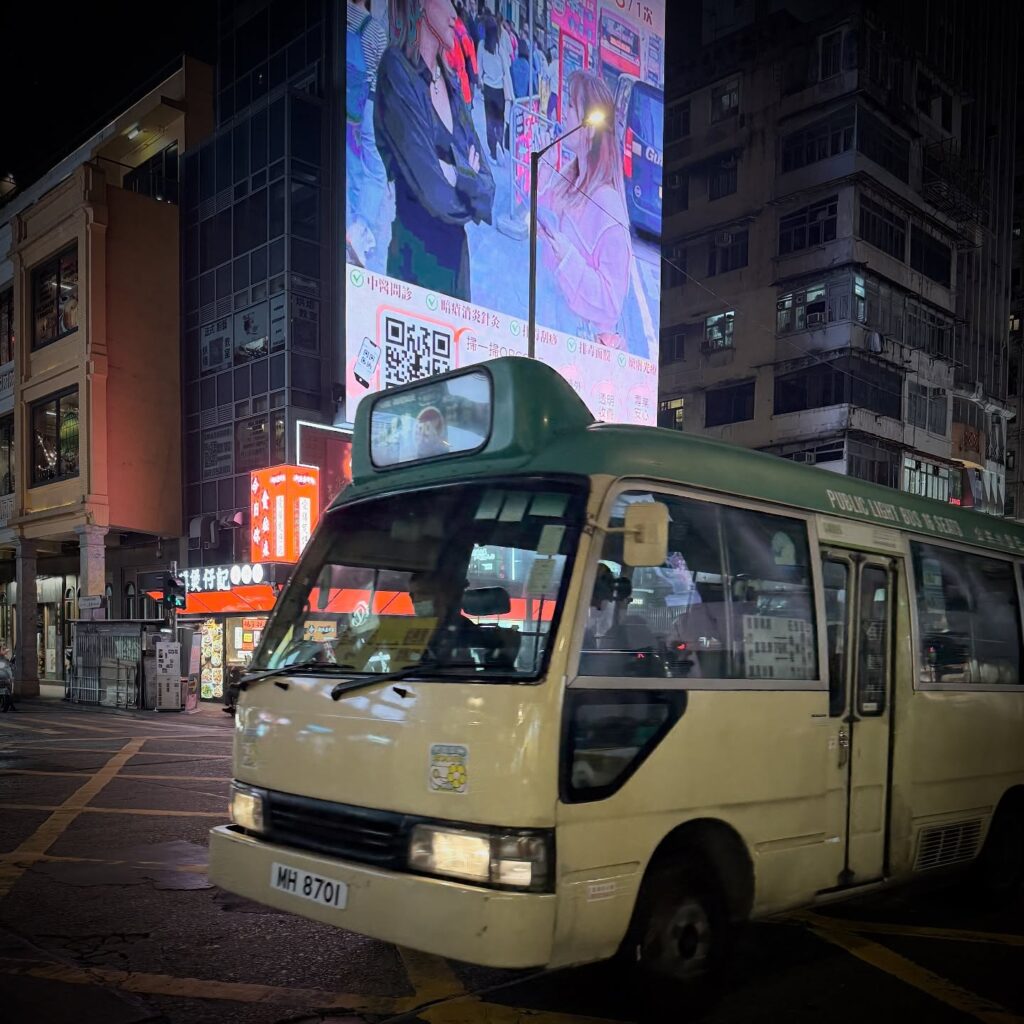

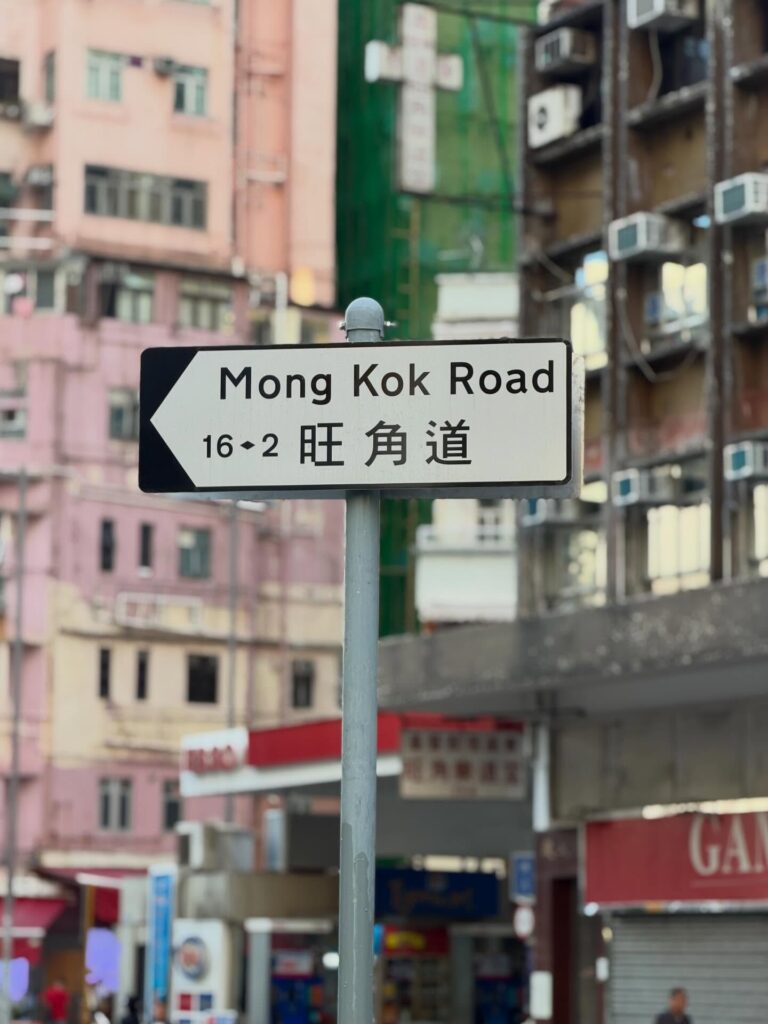
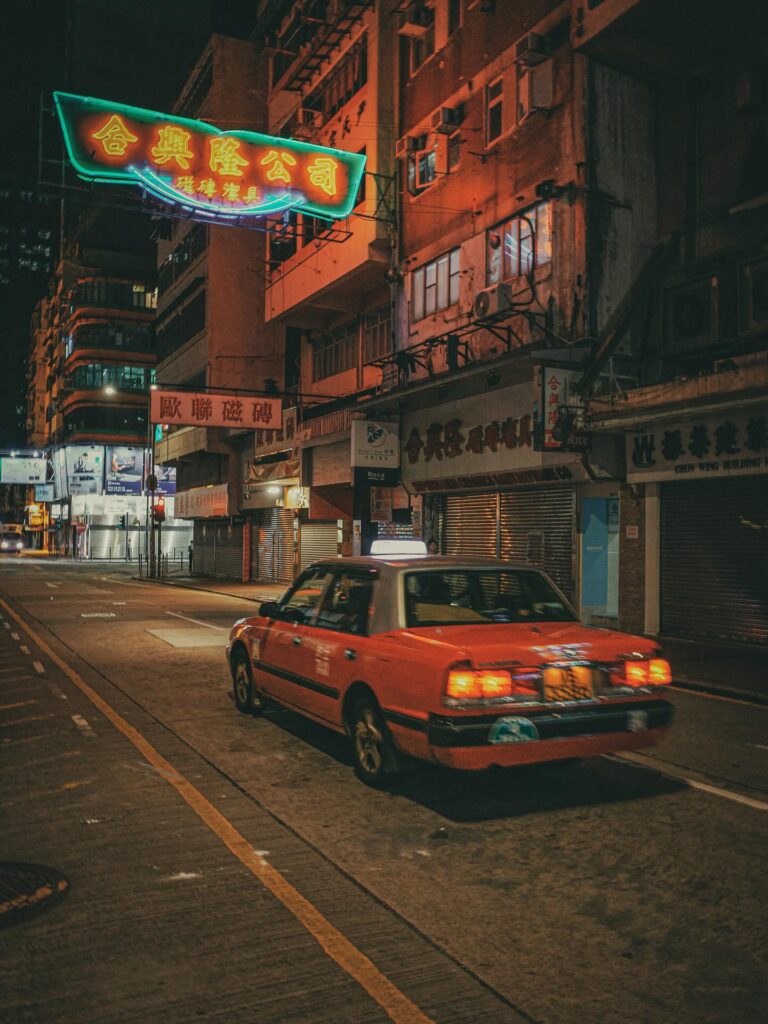
The thing I still like most is how casually absurd the visual density can get. Red minibuses under LED wash. A taxi cutting across an old sign. A lane marker pointing somewhere obvious as if that helps. Everything competing for your eye at once. A smorgasboard for your frontal cortex.
The back lanes are where the neighbourhood gets honest
Mong Kok’s main roads are loud. The side lanes are where it starts telling the truth.
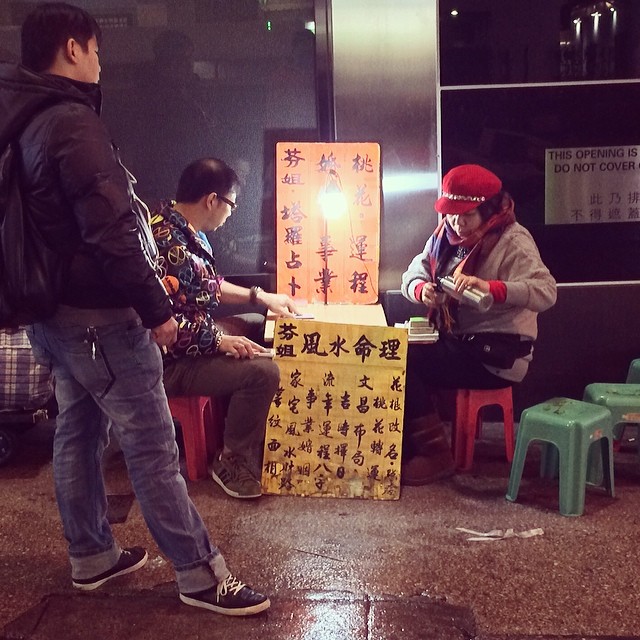
Walk behind the brighter streets and you get altars, deliveries, stacked crates, fluorescent kitchens, narrow alleys with one good sign still hanging on. You also get better food. Not always in the Instagrammable sense. Just… actual food, steam and noodles and plastic stools if you’re lucky.
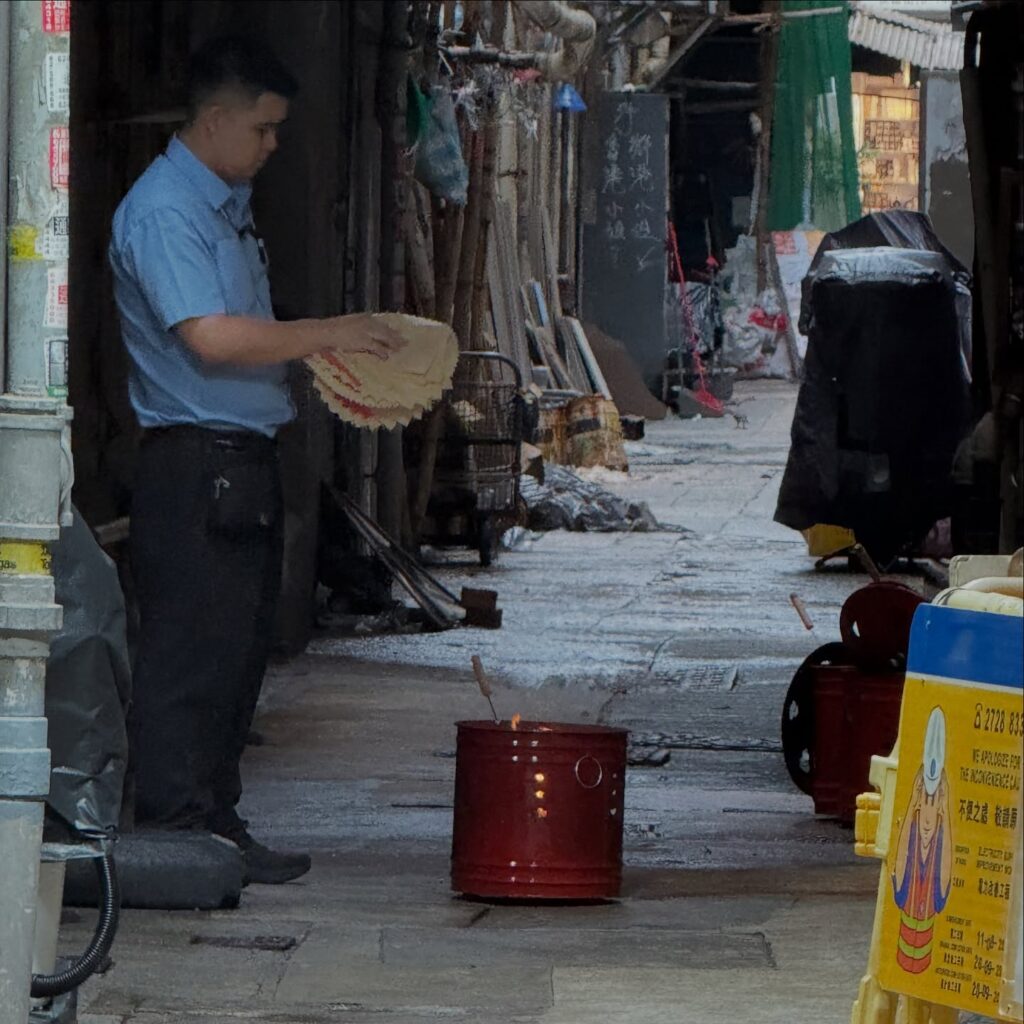
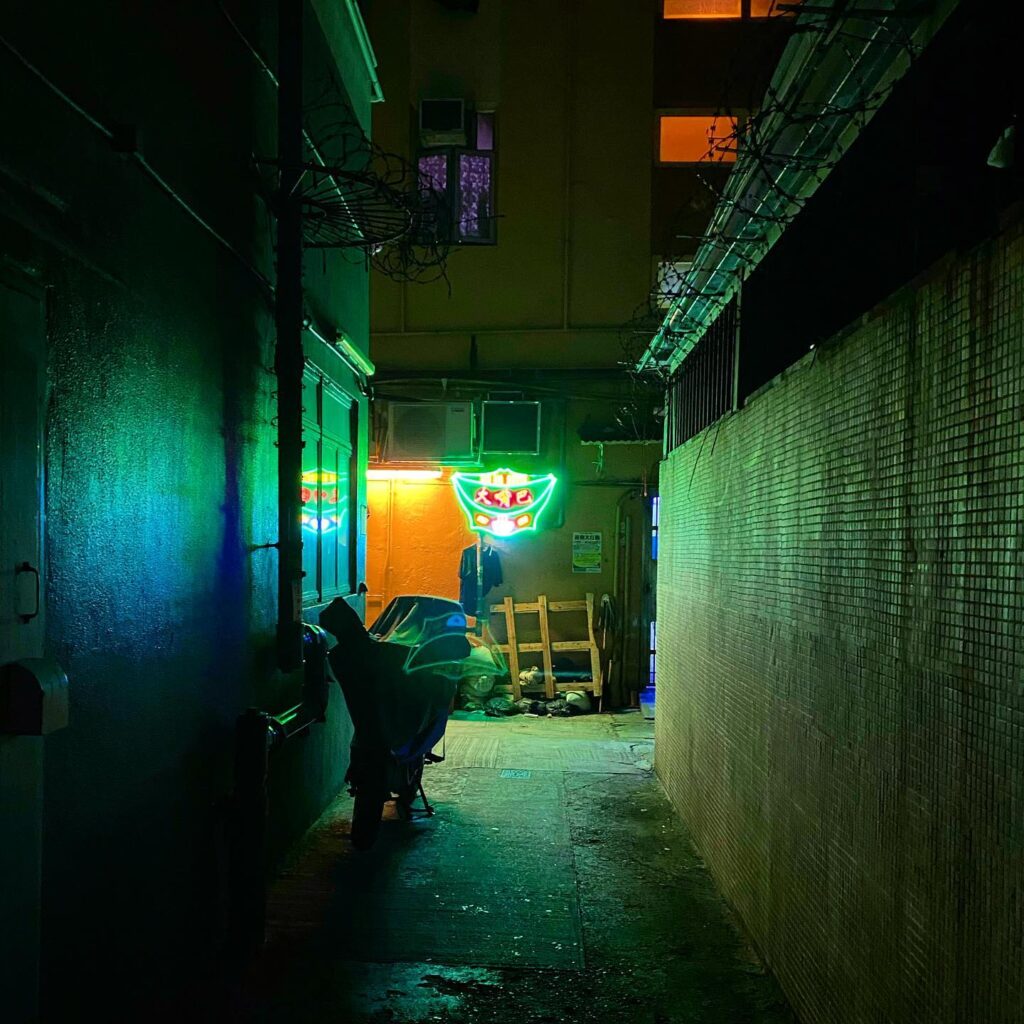
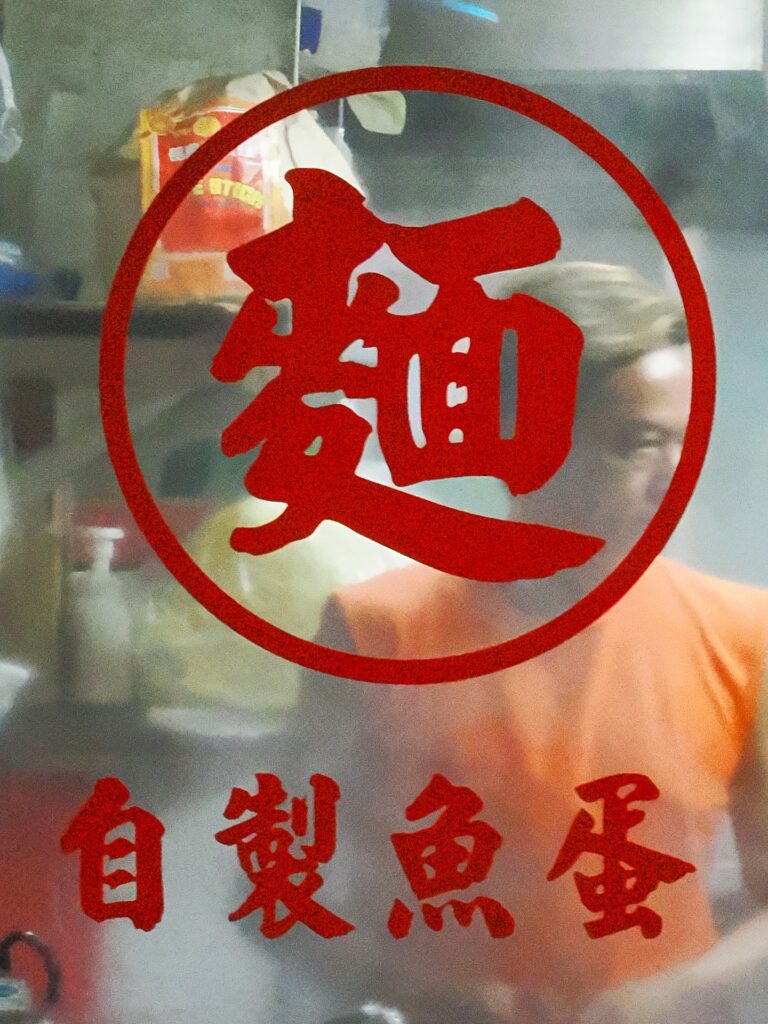
This is why I’d tell folks not to over-plan Mong Kok. Have a loose route, sure. But leave enough time to react. A place like this rewards drifting. One turn too early can be boring. One turn too late and suddenly you’ve got a shrine, a delivery guy, steam on a lens, and a sign that somehow survived another year. Just wander. See something that catches your eye? Make a detour. That’s the best way to experience this place.
If food matters as much as photography (which, let’s be honest, it should), keep Food open in another tab and build your detours around that. Mong Kok is one of those neighbourhoods where a bowl of noodles can become part of the visual memory of the evening. Or if you’re not the sitting type, a skewer of stinky tofu while wandering the streets.
Go when the weather turns a bit nasty
Bright, clean afternoons are fine. But Mong Kok gets interesting when the weather misbehaves.
Rain gives you reflections. Typhoons empty the streets in a way that almost feels apocalyptic. Dawn after four days of bad weather has this reset-button quality… same neighbourhood, totally different feel to it.
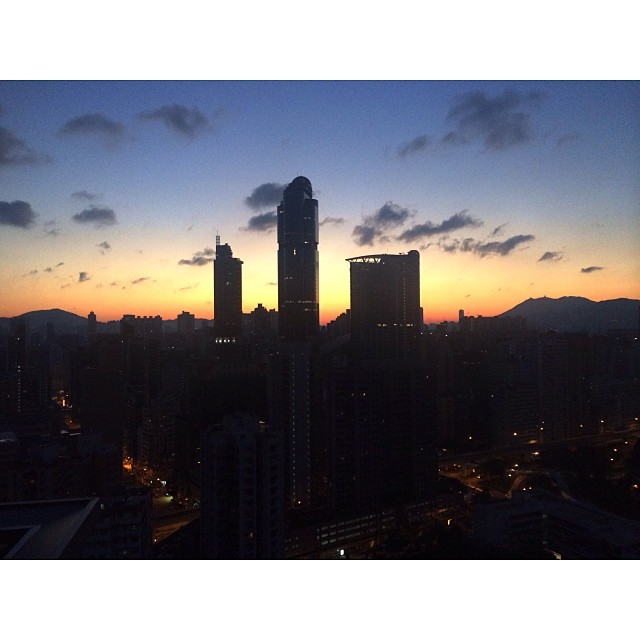
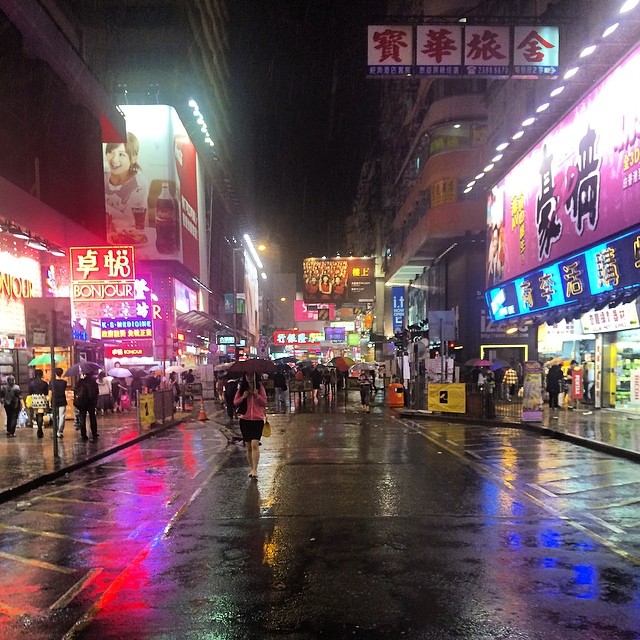
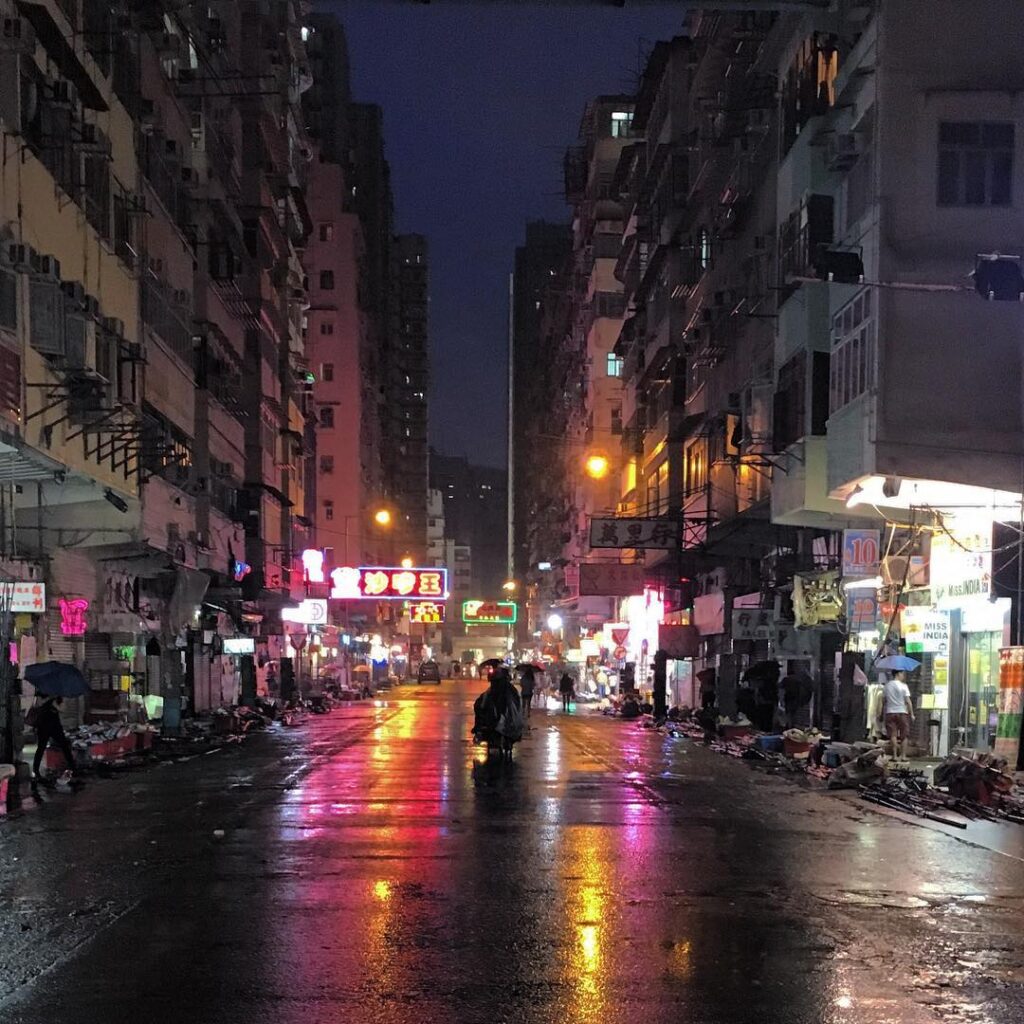
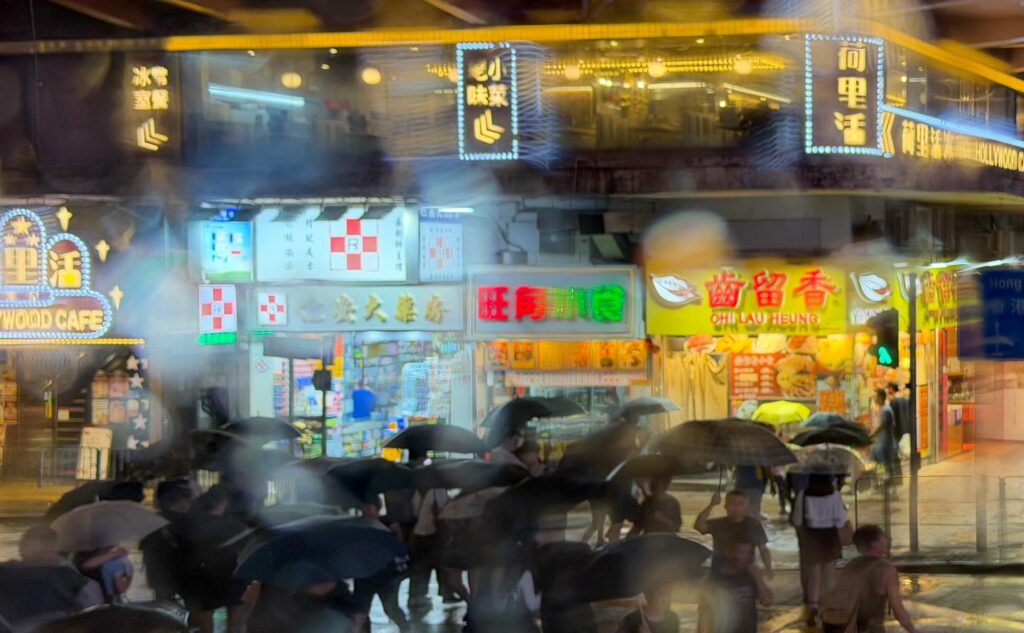
This is one of the reasons generic travel guides don’t quite get the place. They’re usually written for ideal conditions… sunny day, arrive here, buy this, see that, move on to the next district. But Mong Kok isn’t interesting because it behaves nicely. It’s interesting because it keeps producing scenes under less-than-ideal conditions. Very hardworking this place.
Mong Kok is also a record of what Hong Kong has been through
This bit matters.
Over 14 years, Mong Kok hasn’t just been a market district for me. It’s been one of the clearest visual records of Hong Kong’s mood swings. The 2014 occupation. The 2019 unrest. The empty pandemic streets. The pedestrian zone disappearing. The old signscape fading into LED.
You can’t really photograph the area for long without picking up that layer.
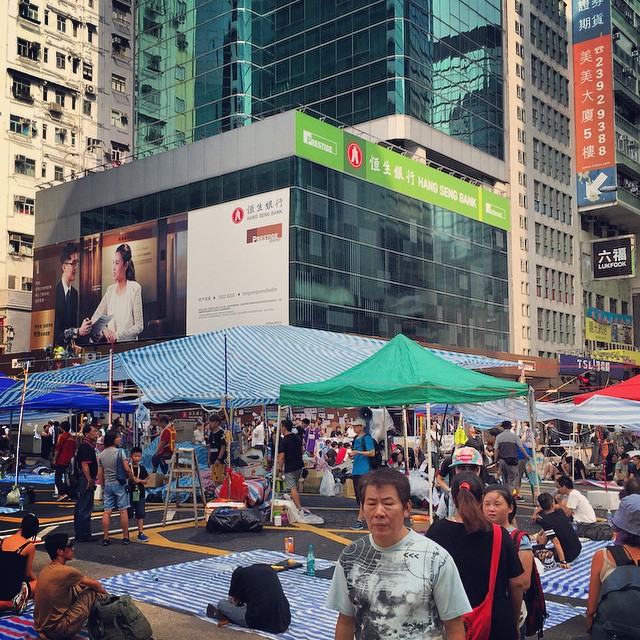
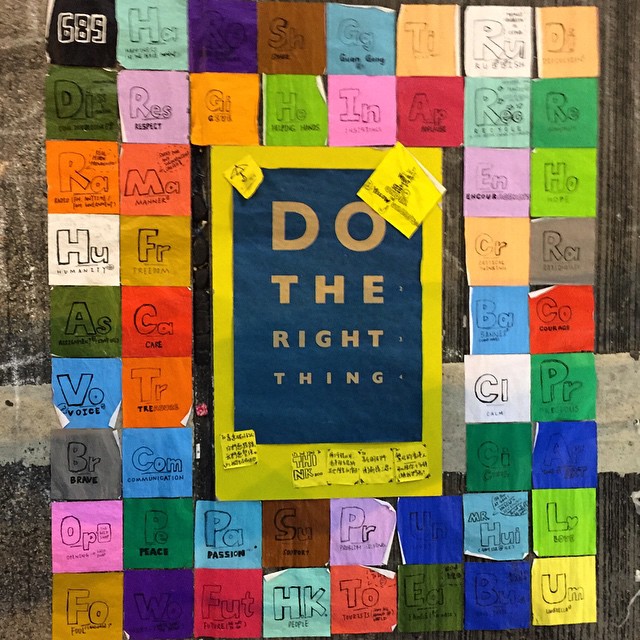
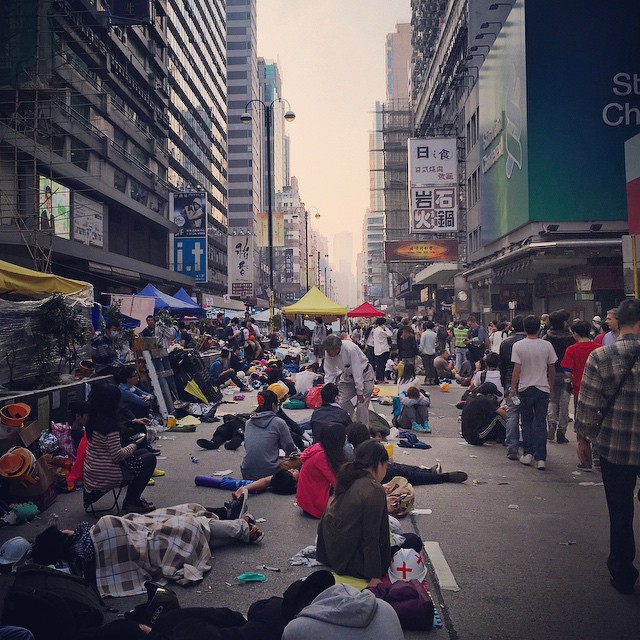
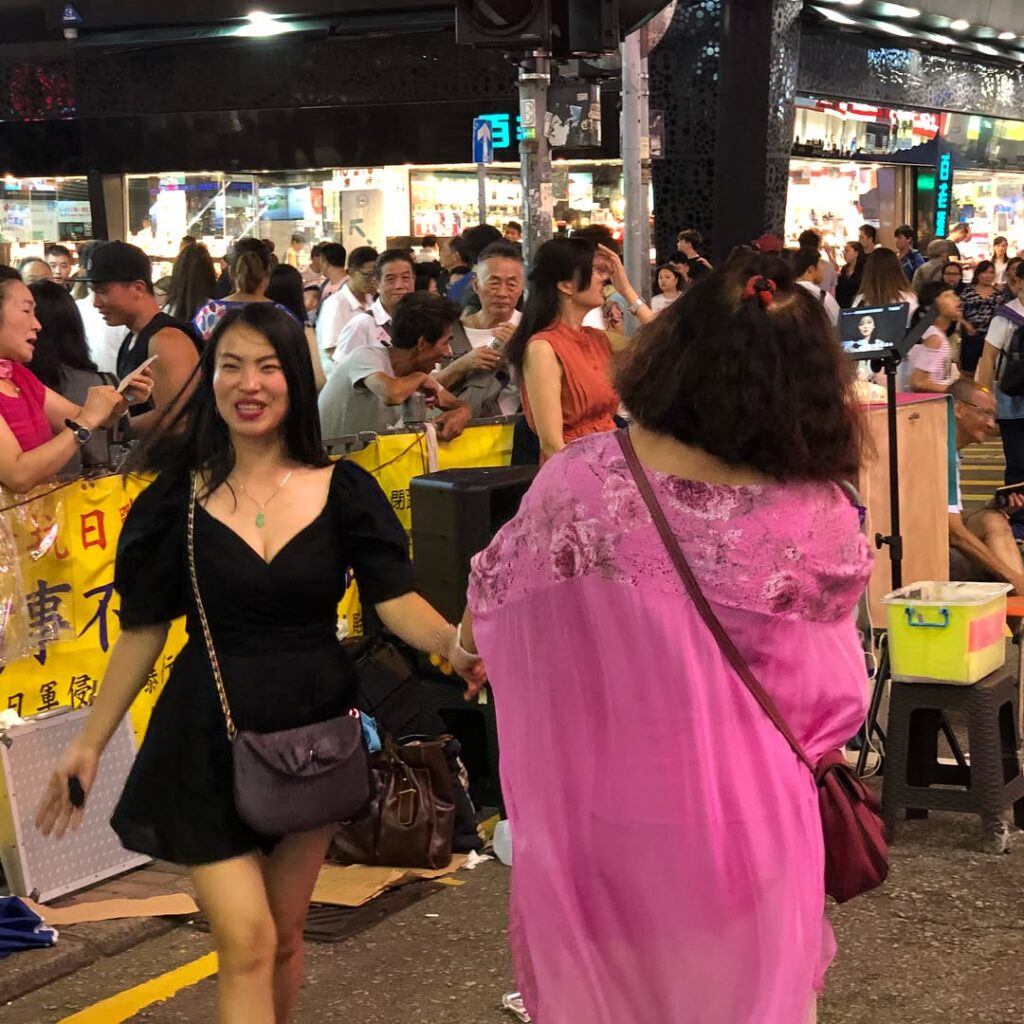
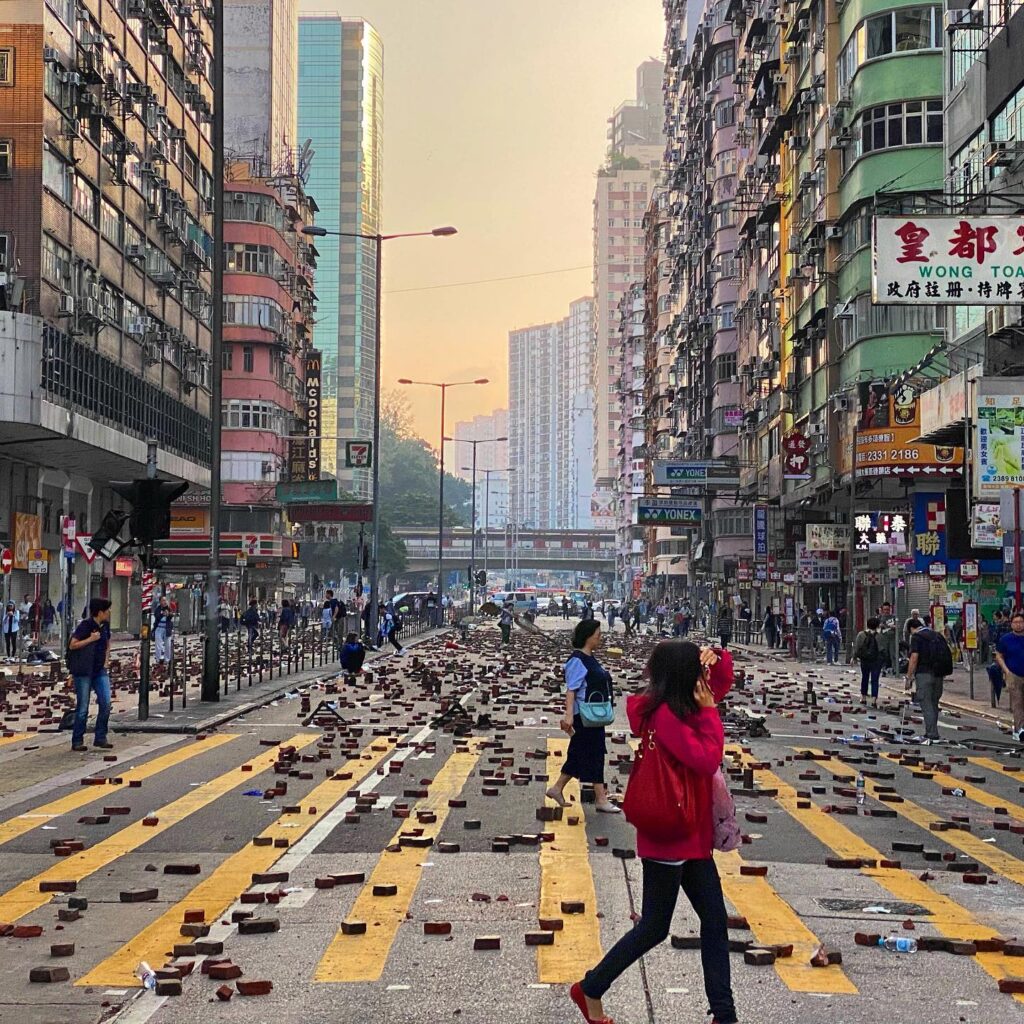
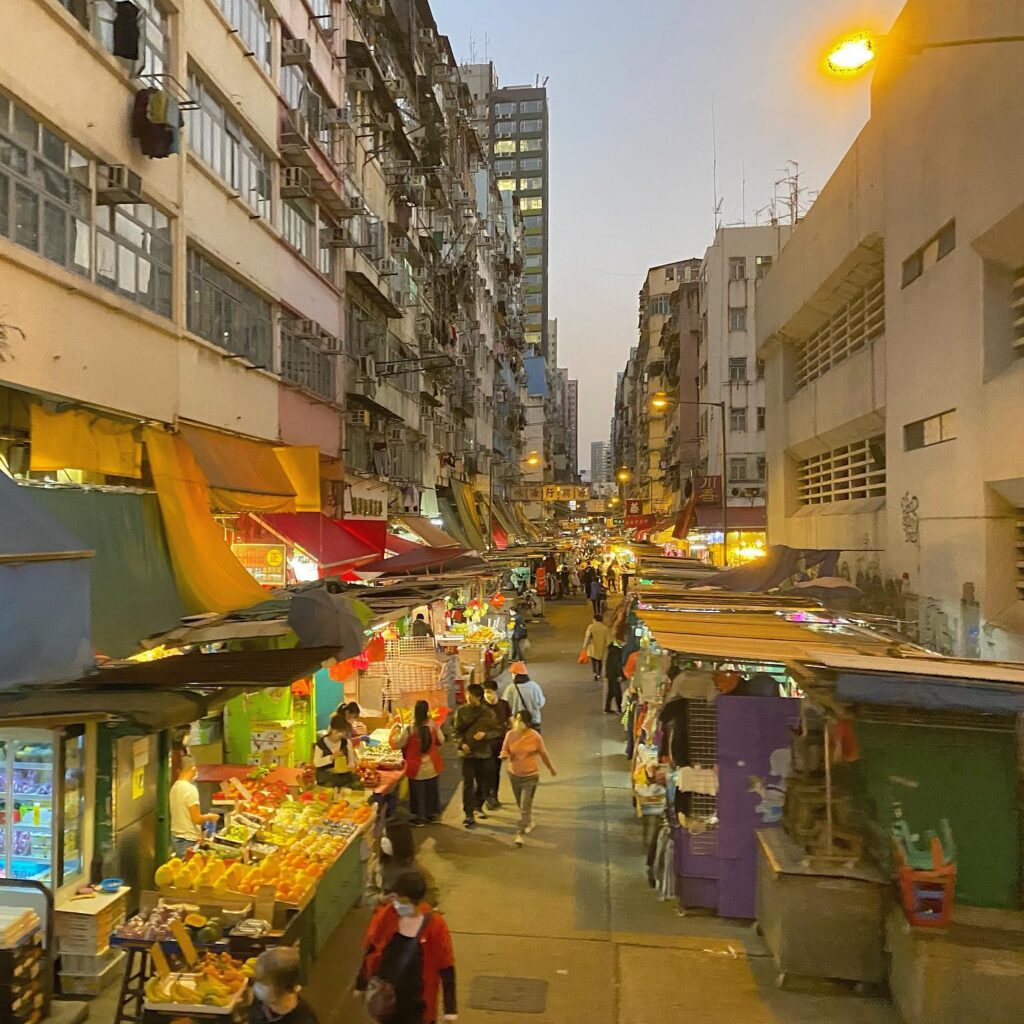
That’s the gap, really. Most guides give you ten stops and a snack suggestion. Useful enough, for a toursit, I guess. But they can’t show you how a neighbourhood feels across a decade and a half. They can’t show what it looked like when the streets were occupied, then empty, then crowded again under brighter non-neon lights.
Mong Kok isn’t only a place to visit. It’s a place to experience.
A practical way to walk it
If you’re here mostly for pics, I’d do it like this:
Start your morning at the Flower Market and the Bird Market / Garden. Have your breakfast or brunch in the area. Smell the floral fragrance and then the bird shite. Hear the rustle of leaves and wings.
Then adjourn for some shopping at Langham Place. It’s an incredible vertical mall with two very long escalators. Go up to the top and then walk the sprial walk down. Have lunch in the area.
Then around 4.30pm or so, hit Tung Choi Street while there’s still some daylight left. Cut through Ladies Market and Fa Yuen Street. Get an early feel of the area before the night falls.
Then double back south as the light drops. Take Nathan Road, then Argyle Street, then Canton Road. Give yourself permission to get distracted by side alleys. If it’s drizzling, even better. If it has just rained, better still. Now return to the Ladie’s Market for the night hustle.
For a more complete sense of the district, mix this walk with the Mong Kok archive, the Night Neon theme, the Transport theme, and the main Hong Kong photography spots guide. If you prefer exploring by geography first, my map might help a bit too.
And one more thing… don’t go to Mong Kok expecting a tidy set of “best photo spots”. That’s the wrong frame. Go expecting overlap. Markets bleeding into traffic. Old signs next to new LEDs. Commerce next to ritual. Rain next to steam. A neighbourhood that always seems one degree too loud, one degree too bright, one degree too alive… Long Live Mong Kok!